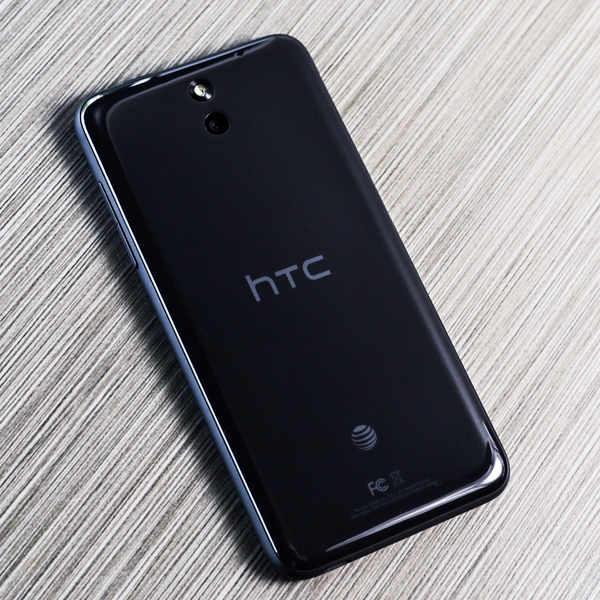
HTC is reportedly gearing up to launch a new Windows Phone as soon as next month, Engadget reports.
The new device, called “HTC One (M8) for Windows,” is said to feature a 5-inch high definition display with a Snapdragon 801 processor, Ultra pixel rear-facing camera, BoomSound front-facing speakers, and support Voice over LTE.
An official release date has yet to be announced from HTC, though many speculate it will be released for Verizon customers in August, or “no later than the end of September.”
According to GottaBeMobile, the device will be priced at $199 with a two-year contract or $610 without a contract.
We likely don't need to tell you that HTC's choice to stick with a 4-megapixel camera for its flagship smartphone has been quite the controversial topic. According to the company, the One M8's larger, 2μmpixels are what makes the M8's camera great, though we never really agreed with them. Indeed, we continue to think that the One M8's camera lags behind all rival smartphones - the Xperia Z2, the Galaxy S5, the LG G3, you name it.
Recently, HTC announced the One E8 -- a near-identical, but plastic version of the One M8 with a different, more-orthodox 13-megapixel camera. We instantly saw an opportunity to put the two to the test in order to see what happens, and that's what we did.
Showdown
Let's talk facts first. The HTC One E8 is equipped with a 13-megapixel, 1/3.06'' sensor with f/2.2 lens and a single LED flash that we found to be fairly impotent. The HTC One M8, on the other hand, goes for a different approach, as already mentioned, and instead makes do with a 4-megapixel "UltraPixel" Duo camera with a 1/3'' sensor, f/2.0 lens, and a two-tone LED flash.
Resolution
Sensor size
Aperture
Flash
Features
Video
HTC One E8
13MP
1/3.06'' 4:3
F2.2
Single LED
Digital image stabilization, HDR, Panorama, Scenes
1920x1080, 30/60 fps, HDR video
HTC One M8
4MP
1/3'' 16:9
F2.0
Dual tone LED
Digital image stabilization, HDR, Panorama, Scenes, Duo Camera Effects
1920x1080, 30/60 fps, HDR video
On the whole, we found that the One E8's camera is superior to that of the One M8, and pretty much across the board. In other words, while the amount of detail that is offered by the E8's higher resolution shooter is undeniable, its superiority extends to color reproduction as well. This applies to indoor photography, as well as outdoors during the day or night. Further still, this is despite the weaknesses of the E8's snapper, like the fact it consistently introduces a yellow fringe to photos and often underexposes snaps (so does the M8, by the way). In fact, even when the E8 stumbles, it usually is the case that the M8 itself stumbles too, and the two end up with comparable results that are simply inferior for different reasons.
A small saving grace for the One M8 is video capture, where it proves to be the better choice and produces footage that is noticeably more dynamic than the overly-murky clips the One E8 manages. Another advantage the M8 has over the E8 is its Duo camera setup, which allows you to get a bit more creative and capture some fairly decent bokeh photos, along with the M8's superior overall speed in snapping photos.
The depth-sensor allows users to create refocused images as well as 3D effects, and it works quite well, we found in our One M8 review.
HTC is reportedly working on a Windows Phone handset based on the HTC One M8.
According to Engadget, the "One (M8) for Windows" will feature the same front-facing BoomSound speakers as the Android-based M8.
Additionally, the variant will boast a depth-sensor for photo trickery, much like its Google brother.
The new handset looks set to ship with an update to Windows Phone 8.1 too, which will offer support for advanced covers and voice-over LTE technology for US networks.
The last HTC Windows Phone was the HTC 8X, a slick-looking handset that was essentially the One X Android phone in a new body.
HTC is due to launch a smartwatch, known as the HTC One Wear, in late August/early September. This smartwatch offers a more stylish look than it's competitors and pairs flawlessly with all of their new powerful mobile devices.
TK Tech News claims to have seen the HTC One Wear in action in Taiwan, and says it has a similar design to the Motorola Moto 360, with a rounded clock face.
Aside from the colour, the device remains the same featuring a 5in Full HD screen, support for 4G LTE and the innovative Duo Camera with a depth sensor allowing users to refocus photos after they are taken.
O2 and Carphone Warehouse have announced that they will exclusive versions of the HTC One M8 smartphone in red and pink colours.
The mobile network O2 will offer the red colour of the flagship Android handset from 4 August, joining the Amber Gold and Metal Grey models. Customers can get the new model on O2's Refresh tariffs with up to 8GB of data.
Meanwhile, Carphone Warehouse is offering the flagship in pink (below) from 25 July starting at £28 per month including a free Dot View case.
"Honed from a single piece of aluminium, the HTC One M8 continues to flaunt the attention to detail and innovation that earned the first generation HTC One (M7) a prestigious iF Design Award." said O2.
O2's Refresh tariff means that customers only need to pay for monthly minutes, texts and data once they've had a phone for two years. Alternatively, they can upgrade early by simply paying what's left of that half of the contract.
The HTC One M8 is one of the best smartphones this year but it has strong competition from the LG G3 and Samsung Galaxy S5. Later this year the iPhone 6 is expected to arrive and will take on all these high-end Android devices.
HTC One (M8) pink version pictured ahead of release
The HTC One (M8) is a properly pretty phone – one that has a design so sleek that it looks great in just about any color. However, that shouldn’t be an excuse not to offer us more choice and we are glad to report HTC is not using it.
We’ve got a press photos of yet another hue that is going to join the HTC One (M8) palette – Pink. The distinctly feminine color is said to launch this year, but that’s as specific as the info from the source gets. We are even not sure if the pink color will be available before or after the red version we heard about earlier.
Anyway, whenever that happens the total number of available HTC One (M8) colors will be brought to five. The smartphone launched in the more classical Gunmetal grey, Amber gold and Glacial silver versions, while the two new colors will add some more punchiness to its design. We’ve also heard rumors of a blue version coming, but there has been nothing solid on that one just yet.
Would you be picking the HTC One (M8) in any of the new upcoming colors or have you already gone for one of the more traditional paintjobs?
There's nothing more frustrating than having your phone battery die just when you need it the most which, by some weird law, is always when it seems to die. Use these eight tips to keep your HTC One M8 phone lasting longer.
A blue-colored HTC One (M8) has gone up for pre-order in the United Kingdom. The recently-leakedversion of the Taiwanese flagship is offered online by MobileFun.
The HTC One (M8) with a brand new lick of paint (it is caller Aqua Blue) is priced at £549.99 for a 16GB SIM-free version. The price tag does not carry any premium for the new color scheme – it is the same for the already available versions with 16GB of memory on board.
There is no word on the shipping date of the blue HTC M8. We doubt it will be a long wait.
I'd hate to be a phone designer these days, trying to achieve unique and exciting features in a jaw dropping package for what is essentially a screen with some extra bits and pieces surrounding it.
So it's all the more impressive that HTC, fresh from making the best-looking phone of 2013, has managed to make the HTC One (M8), a phone crammed full of power and great features while improving the design that won it so many accolades.
The poor naming aside, the One (M8) is a phone that takes the superb DNA of last year's device, improves it in nearly every area and then packs it full of all the latest technology...and still finds space to pack in a microSD card slot.
On top of that the chassis has been retooled to now be made of 90% metal, up from around 70% last year, and the result is a brushed aluminium design that seems compelling the second you lay eyes on it.
Which makes it all the more confusing when you consider HTC has brought out the One E8; same size and internals, but with a plastic chassis and no duo camera. Here's the other confusing bit: it's going to be £200 cheaper too.
Check out the key differences with our quick comparison:
Let's go back in time a little bit here: when it launched the HTC One X - let's not get into the fact that this company needs to employ a whole new team dedicated to naming products - HTC was in a nosedive.
From the heights of the HTC Desire, the world's first true iPhone competitor, it had fallen dramatically, and sales were in the toilet. The brand needed a reboot, and the HTC One was just that. It wasn't a commercial success in the same vein as the iPhone 5S or the Samsung Galaxy S4, but it was critically superior.
So HTC had a tough choice: make a sequel that was mere evolution, an HTC One S (wait... that's been done) if you will, which would make the world realise it truly believed in its design trajectory, or reinvent the wheel again, try and different kind of impressive phone and run the risk of offering up a flop?
Somehow the company has managed to navigate these choppy waters and create something that stands astride both categories.
The HTC One (M8) is an even better-designed device that takes the principles of the original One, expands them in the right places and adds in some more HTC sauce here and there.
The result offers up something that can compete with Samsung on the technological front yet still stand toe-to-toe with Apple, arguably the producer of some of the best-looking devices of all time.
Of course, the One (M8) isn't a phone that's going to be to everyone's tastes. It's expensive, coming in at least £500 SIM free (AU$899, around US$820), but that's to be expected from a flagship phone like this.
The metallic chassis is really the premium reason, but it will be interesting to see if buyers still are as wedded to it when the One E8 offers such similar specs with a much lower price.
You'll need to be ready to pay top dollar for the HTC One (M8), but once you hold it you'll accept that it deserves to command such a premium.
There are other things that will put off some too: the fact that the screen is now 5 inches mean this is a larger device, one that can take two hands to operate at times, and it's even bigger than the 2013 version as a result.
HTC needs to sort out its efforts in the mid-to-low smartphone arena, but that's a topic for a different day. The HTC One (M8) is a phone that's supposed to offer the best of the smartphone market, one that will survive the onslaught of the iPhone 6 and the Galaxy S5, while preserving HTC's heritage and bringing the bottom line closer to something more healthy.
Through a clever combination of technology and design, it appears the company has managed to just do that - and in today's impossibly congested smartphone market (especially at the high end) that's something to be applauded.
Design
As you can guess from the introduction, the HTC One (M8) is a phone that is as much about premium design as it is about packing in the latest version of Android and a decent processor.
The brand took great pains to point out that the One (M8) is a phone that builds on the heritage of last year's One, but improves in just about every arena. The metal chassis is still there, and the aluminium casing now makes up 90% of the frame, up from about 70% previously.
This is probably the most significant change, along with the fact the back and sides are now more curved, as it brings a really impressive feel in the hand. If the original One was characterised by first-time users saying 'Wow, that feels lovely' the next iteration takes that message further.
There will be very few brand-agnostic people that wander into their local phone emporium, pick up the HTC One (M8) and a couple of competitors, and find that the Taiwanese brand's new device is streets ahead in the design stakes - and I'd bet that most would be unable to resist a purchase after that.
The difference here between the One (M8) and the iPhone 5S - the two phones that lead the way in the design stakes - is weight and screen size. Having something that feels premium is incredibly important when you're spending so much on a phone per month, and while the iPhone is beautiful in its metal casing, it's too light to feel like you're getting something really premium.
There's a subconscious reaction when you pick up something for the first time, a natural expectation of how it might feel in the hand, and the HTC One (M8), with its 9.35mm thickness and 160g weight, marries those two very well.
It's no coincidence that smartphones are packing on the grams a little bit these days. Where around 120g was the fashion a couple of years ago, now we're seeing heavier phones as designers try to meet a new paradigm (plus all that new technology needs to go somewhere, after all).
Let's look at the actual design of the HTC One (M8) - and it's definitely equal parts evolution and revolution.
The flagship version will be this metallic grey, although a silver version that evokes the previous model and a champagne / rose gold option will be both available too. However, this brushed metal effect is stunning, and helps distance the One (M8) from its predecessor.
Holding it in the hand is a really pleasant experience, one that makes you feel like you're holding something you should spend a lot of money on.
Quite rightly some will baulk at the larger chassis, mostly down to the decision to include the Boomsound speakers above and below the screen, but once you've heard them in action you'll struggle not to agree that they're not a worthy trade-off.
The iPhone 5S and even the Galaxy S5 have a more compact design language than the One (M8), which is larger thanks to the speaker addition, but overall I don't think this detracts from the overall effect.
The headphone jack has been moved to the bottom of the phone, which will anger some users. I still think this is an unintuitive place to add the port, as I've become used to having it at the top. Arguments that it makes it easier to slip in and out of the pocket don't hold water, and it makes the phone hard to hold in portrait when listening to music.
But I've got some really good news for you phone-lovers out there: the HTC One (M8) comes with a microSD slot! I thought this would never happen after the brand did away with the expansion last year, citing design reasons and a general lack of need thanks to the ubiquity of cloud storage (which is clearly still not true).
To hammer home that last point, HTC told me that it re-introduced the expandable memory as it was a) able to do so without compromising the design and b) it had heard from so many consumers that this was a real sticking point for not buying the original One.
It's always good to see a brand climb down when consumers ask for something, and now this means that there are no issues about filling your phone up with photos and home videos as well as music and movies.
The slot isn't that easy to access on the fly, as like the nanoSIM port it needs a small tool to pop open the drawer. That might be annoying for the more hardcore photographer, but most people will rarely, if ever, hot swap cards, so it just offers a cheap and easy way to increase the 16GB / 32GB onboard storage by up to 128GB.
The top of the phone is all plastic still, and this is to with antenna technology as well as allowing the infrared signal to control home theatre devices.
This, combined with the thin plastic strips on the rear of the phone, allow for phone and Wi-Fi signal to permeate through the chassis... when you hear engineers talk about how hard it is to make a metal phone that can still connect to other devices, the design language of the One is even more impressive.
The phone isn't perfect on the One (M8) though - although the following points are more little irritations than anything that undoes the work of the overall design ethos.
One area I'm really happy about is the button travel, as the original One has very flat keys that were hard to find and press. The One (M8) improves on that massively, making everything easier to find in the pocket or bag and tap.
However, the keys still feel a little plastic and have a little bit of wiggle when rocked back and forth. This is the same criticism I had with the first One, and it got sorted after a couple of months, but I'd expect a phone of this calibre to have every part of the device locked into place - a rattle ruins things a little bit.
The power button is still on the top of the phone, which I can live with, but it's been moved from the left to the right side. I've argued with a few people about this, as it seems that some people prefer this orientation where others find it incredibly hard to hit.
I'm in the latter camp, as my finger naturally sits on the left of the phone and I found it very easy to unlock the first One. Now not only do I have to shuffle along to find the power button, but whenever I do so I accidentally engage the volume key, meaning I always keep turning the ringtone up and down.
This was probably the most infuriating part of the HTC One (M8) - which isn't a bad thing to have at all, but is a poor thing to happen over and over again.
I'm also a bit perplexed about the fast HTC decided to drop the capacitive buttons (understandable given Android 4.4 KitKat's love of on-screen keys) yet keep the same big black bar that contains the HTC logo. This feels like a lot of wasted real estate on the front of the phone, and could have allowed the brand to keep the same footprint as the previous model if it had found another place to chuck its name.
The reason for this is probably due to the need to pack in the necessary internal components while maintaining the Boomsound speakers, but given the level of intelligence on show here when it comes to packaging the device, it seems like a missed trick.
But before you get too downhearted, here's the upshot: the HTC One (M8) is one of the most beautiful phones ever made, and that's a statement that's even more impressive given we were saying the same thing about the device this time last year.
The improved use of metal in the chassis really works, and the shape is updated without losing any of the heritage of last year's popular model. The addition of a microSD slot is inspired, and while I can't say I'll ever get on board with the headphone jack being on the bottom, it's something that you can live with.
In short, if you want a phone that looks the absolute business in the smartphone world, AND builds in some top-end components, I'd wager you won't do much better in 2014 unless Sir Jony Ive has something absolutely spectacular up his sleeve.
Last month we wrote about the HTC Desire 610 making its way to the AT&T network. Today we have official confirmation from HTC USA’s Twitter page as well as an AT&T product page. We’ve also come to know how much the device will cost and when it will be available.
Desire 610: Price and availability
HTC is ready to launch the device in the United States and the launch date isn’t that far away. HTC tells us that the smartphone will be available on July 27th. AT&T also published a product page for the device and says that it is ‘Coming Soon’. It’s currently being speculated that the HTC Desire 610 will only cost $199 from AT&T and that is without a contract.
HTC Desire 610 Tech Specs
The HTC Desire 610 looks somewhat similar to the HTC One M8. However, instead of having the shell made from metal, the device has housed in plastic. The 610 has a 4.7 inch display capable of a 960 x 540 pixel resolution. Inside we see the Qualcomm Snapdragon 400 SoC; this is a 1.2GHz quad-core processor paired with the Adreno 305 GPU. The Desire 610 has 1GB of on-board RAM and 8GB of internal storage. The device will most likely ship with Android 4.4.2 KitKat with HTC Sense and it will be powered by a 2040mAh capacity battery.
We recently posted a video of the specs comparison between the HTC Desire 610 and the Sony Xperia M2. The device seems fast enough to get your every day tasks done, and will handle everything except the most demanding apps and games from the Google Play Store. Let us know in the comments’ section about what you think of the HTC Desire 610.
In recent smartdevice news, tech fans will be excited to learn that the latest Android update is now available for the HTC One M8 and M7.
Android 4.4.4. KitKat patch has brought about an improved handset performance, upgraded security and stability, as well as fixing a few bugs. The user interface has also received an update on the HTC One M8 and M7. For other phones however, like the Nexus phones, there isn’t much of a difference from the previous UI version.
People can expect the update to come rolling onto their phones this July. Notifications will be sent to the phones whenever the update is ready. If ever the notification is not received, users can always go to the Settings Menu to activate the update.
Most other devices will be receiving updates for the Android 4.4.3 upgrade as well. HTC has tried out testing the update with Sense 6 on both the M8 and M7 devices, but will promptly skipped out on the 4.4.3 in preparation for the Android L update which is set to come out soon.
Depending on the testing, most HTC devices will not see 4.4.3 and will directly update to 4.4.4. The HTC One M7, HTC One Max, Butterfly S, Desire 816, and the Desire 610 will remain on the 4.4.2 version for the meantime.
HTC has made the announcement of the features and the updates that will begin appearing on the Google Play Store “HTC Customers and Enthusiasts, HTC is excited about the new features in Android L release and we can’t wait to share them with you. We are committed to updating our flagship HTC One family as fast as possible as part of our HTC Advantage program,” the company stated.
Rumors of a new HTC-made Nexus Tablet — codenamed HTC Volantis — began to escalate recently after a mysterious tablet (picture above) appeared in Google’s official Material design images. Carrying a nondescript form factor, the only standout feature we noticed was what appeared to be a large front facing speaker towards the top, something HTC is all too familiar with in their devices.
Despite initial rumors suggesting this HTC Volantis (Nexus 9?) would launch carrying rather modest specs, along came @evleaks today throwing everyone for a loop. Mr. Leaks revealed a rather unbelievable assortment of specs and even more puzzling “leaked macro image” of the tablet, showing half a camera and some watermarks, one of which reads “Android Silver OS Alpha 1.4.” For the processor, the Volantis prototype is allegedly using a Snapdragon 810 CPU during its testing phase, with the final model switching over to a 64-bit NVIDIA Tegra K1 in the future.
There’s also mention of a aluminum unibody design, 5GB of non-final RAM (overkill?), and an 8.9-inch 2560×1600 display (prototype is using a 1680×1050 display), 64GB of internal storage, and a 5MP camera (although it could ship with an 8MP shooter). Of course, HTC’s trademark BoomSound stereo front facing speakers were mentioned and while the image above looks pretty official, @evleaks mentions earlier renders being “fake.”
It’s a pretty big pill to swallow. If @evleaks “leaked” specs hold true, this tablet could be one of the most powerful 9-inch tablets to ever hit the market, easily rivaling the best from Apple, Samsung, or any other manufacturer for that matter. Can’t wait to see how this one develops. Anyone thinking this might be their next Android tab?
The HTC One (M8) has been a hit with critics: Our own Brad Molen calls it "a great smartphone that does a lot of fantastic things," while Laptop Magazine goes so far as to say it's "the best Android phone on the market." But now that the M8 has hit all four major carriers in the US and has had a chance to stretch its legs out in the wild, how has it fared in long-term, day-to-day usage? To find out, we turn to user reviews, written by erudite Engadget readers like yourself, and they certainly haven't held anything back.
The M8 scored top marks in the design department, with Mokaky saying he was "amazed by the elegant design and the superior construction of the device," while jaredvillhelm tells us that "people double take when they see the phone in my hand." However, though many users called the handset "beautiful," a few also brought up the M8's slippery nature. Indeed,MaroonR says, "Yes, the phone looks fantastic. However, if you're trying to use it with one hand in the car, you're probably going to drop it. The sides are really skinny, and the back doesn't do much to help you grip it."
MaroonR was pleased with the Sense UI, though, telling us, "The Sense gestures on this are really great -- the phone is tall, so some might have trouble reaching the power button; a double tap turns the screen on. Great!" AhmadAAziz calls it "snappy, intuitive and very simple to use." The camera also got quite a workout from our users, with JonSilveradmitting, "I was nervous about the camera, but for posting/sharing to social media/text/email, the camera is great. The software effects (UFocus, etc.) are nice too." And jaredvillhelm concurs, telling us, "If I wanted ultra clear camera shots, I'd buy a fancy Nikon; for my everyday quick pictures, I'm more than satisfied with this camera."
While professional reviewers do their best to gauge battery life on a phone, the real measure of how well it performs only comes after months of regular use, and jpspidermansays, "The battery on the phone has been lasting me about 36 to 30 hours with moderate use (moderate meaning movies, musics, phone calls and gaming). It's living up to the hype of long battery life without the constant worrying of the phone dying in the middle of the day." Mokaky agrees, saying, "it completes the day with me... no need to carry the charger again."
The best part of reading user reviews is seeing how a product affects the lives of everyday users. AhmadAAziz finds it useful at work, saying, "Sometimes I have to make a phone call from a factory's production yard, with all machinery running, and the in-call sound clarity is awesome." Others have had trouble keeping their phones out of the hands of others, with MaroonR noting that, "People will want to touch it, so be prepared to wipe it clean now and again," while phlogiston says, "I like my wife's iPhone, but it says something about the HTC One when she keeps trying to trade phones with me (I am not making that up)."
So it looks like users love the HTC One (M8) as much as, if not more than, the critics did. If you'd like to tell us how you feel about the M8, it's as simple as clicking the "write a review" button on the page, where you'll be taken to a simple review form.